
Not necessarily.
This patient was referred to me by their dentist because the tooth was considered difficult to restore. It had extensive decay, very little remaining tooth structure and an infection within the nerve.
The question wasn’t simply whether the tooth needed a root canal.
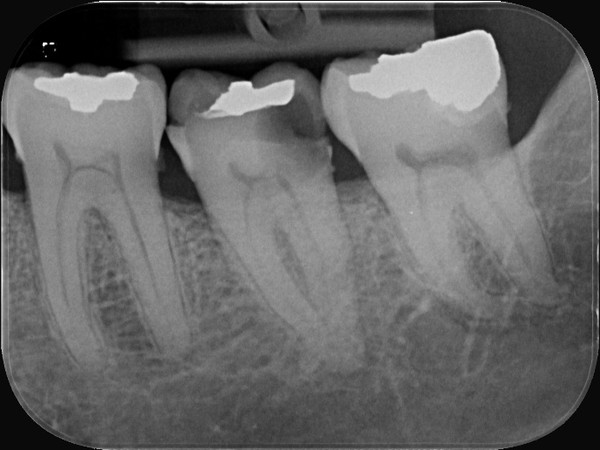
Before starting treatment, the tooth was carefully assessed to establish whether there was enough healthy structure remaining to give it a realistic long-term prognosis.
There was — but it needed to be rebuilt before the root canal treatment could be carried out.
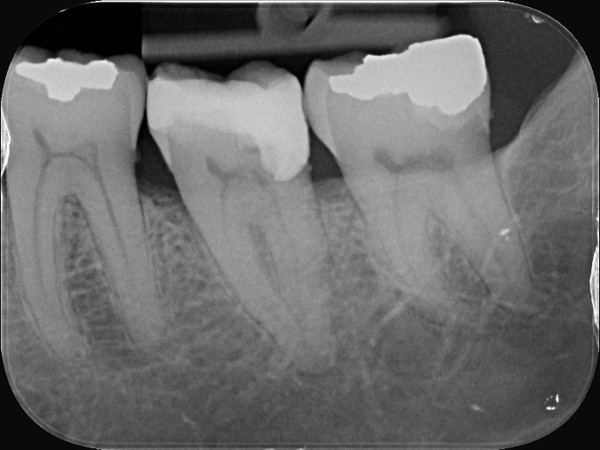
Before the root canal treatment could be completed, the remaining tooth structure was rebuilt with a composite build-up.
This created a more stable structure and helped provide the isolation needed to carry out the endodontic treatment.
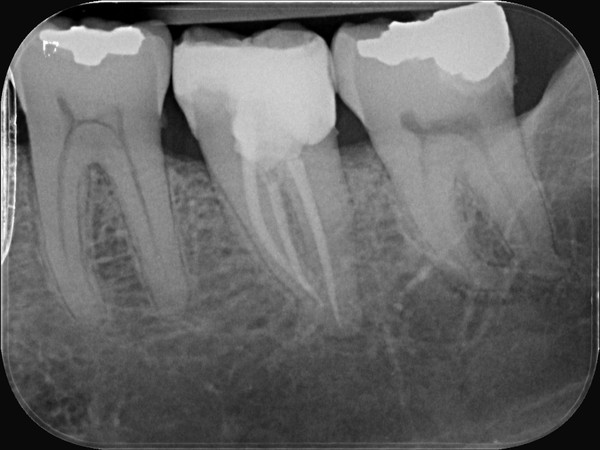
Once the tooth had been rebuilt, root canal treatment was carried out to clean, shape and disinfect the root canal system.
The canals were then filled and sealed to reduce the risk of reinfection.
Once the endodontic treatment was completed, the patient was referred back to their dentist for the final restoration.
Root canal treatment is only one part of saving a compromised tooth. The tooth also needs to be restored properly afterwards.
The final restoration protects the remaining tooth structure and helps the tooth withstand normal biting forces.
This case required careful assessment because the tooth was badly broken down and difficult to restore.
As a dentist with a special interest in endodontics, I work with referring dentists when cases are considered complex or difficult to manage.
Landmark Dental supports dentists across Hertfordshire and Bedfordshire with specialist endodontic assessment and treatment.
The focus is not simply on completing a root canal. The aim is to understand whether the tooth can realistically be retained and, where possible, give it the best chance of lasting.
Modern techniques and effective local anaesthesia mean that root canal treatment should be carried out as comfortably as possible.
Not every tooth can be saved. The decision depends on factors such as the amount of healthy tooth structure remaining, the condition of the supporting tissues and whether the tooth can be predictably restored.
The tooth was successfully treated and returned to the referring dentist for its final restoration.
If you’ve been told that a tooth may be difficult to treat or restore, an assessment can help determine what options may be available.
Landmark Dental
Apsley, Hemel Hempstead
Hertfordshire