
15 Years of Dental Fear. Fixed Teeth in One Day.
Our patient had not seen a dentist for more than 15 years.
She had never had a bad dental experience. She was simply extremely anxious about dentistry — and over time, that fear had kept her away.
By the time she came for an assessment, her teeth had become very loose, one molar was painful and advanced gum disease had caused significant loss of the bone supporting her teeth.
She knew what she wanted.
A removable denture was not an option for her, particularly because she also had a severe gag reflex.
So could we give her fixed teeth without putting her through months of treatment?
Yes.
From failing teeth to fixed teeth
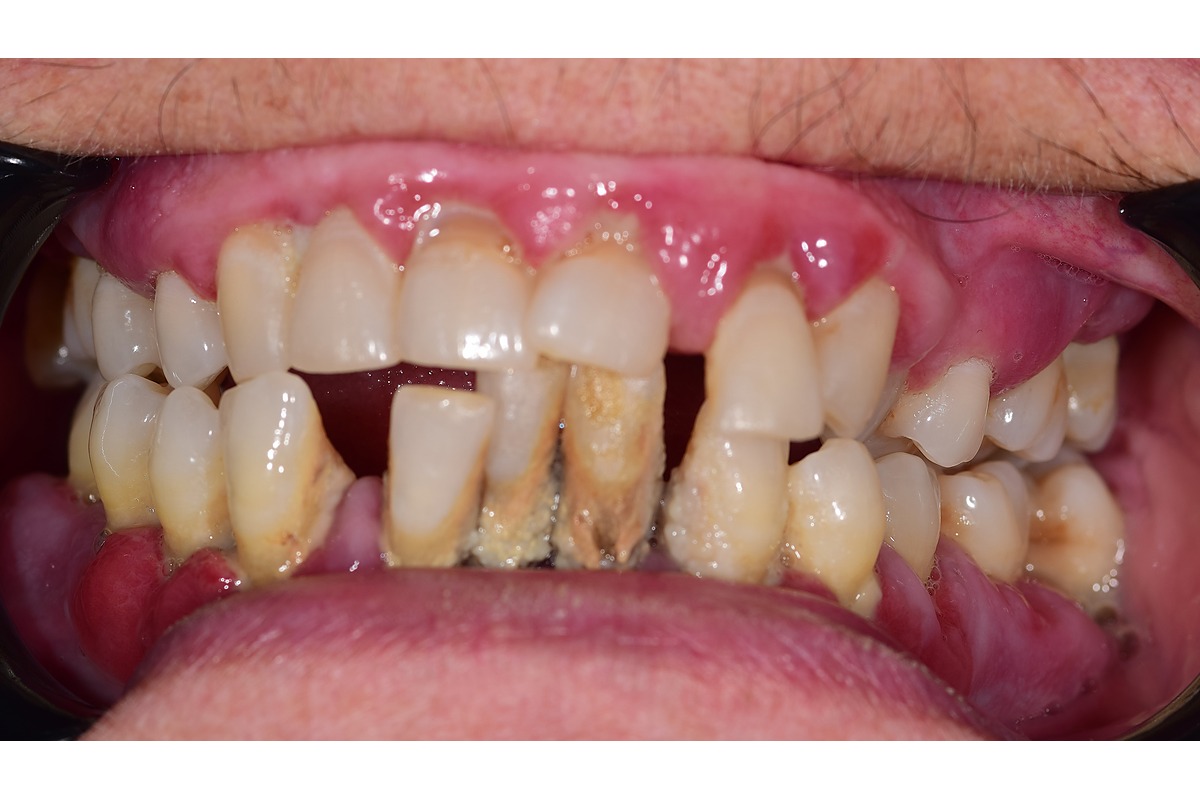
The first step was understanding exactly what we were working with.
Advanced gum disease had caused extensive bone loss, leaving many of the teeth very mobile. Some of the front teeth had also drifted and separated as their supporting bone was lost.
The important thing was that this wasn’t simply a cosmetic problem.
The foundations supporting the teeth had failed.
After a full assessment and 3D scan, we planned a fixed, implant-supported solution for both jaws.
Planning the smile before treatment
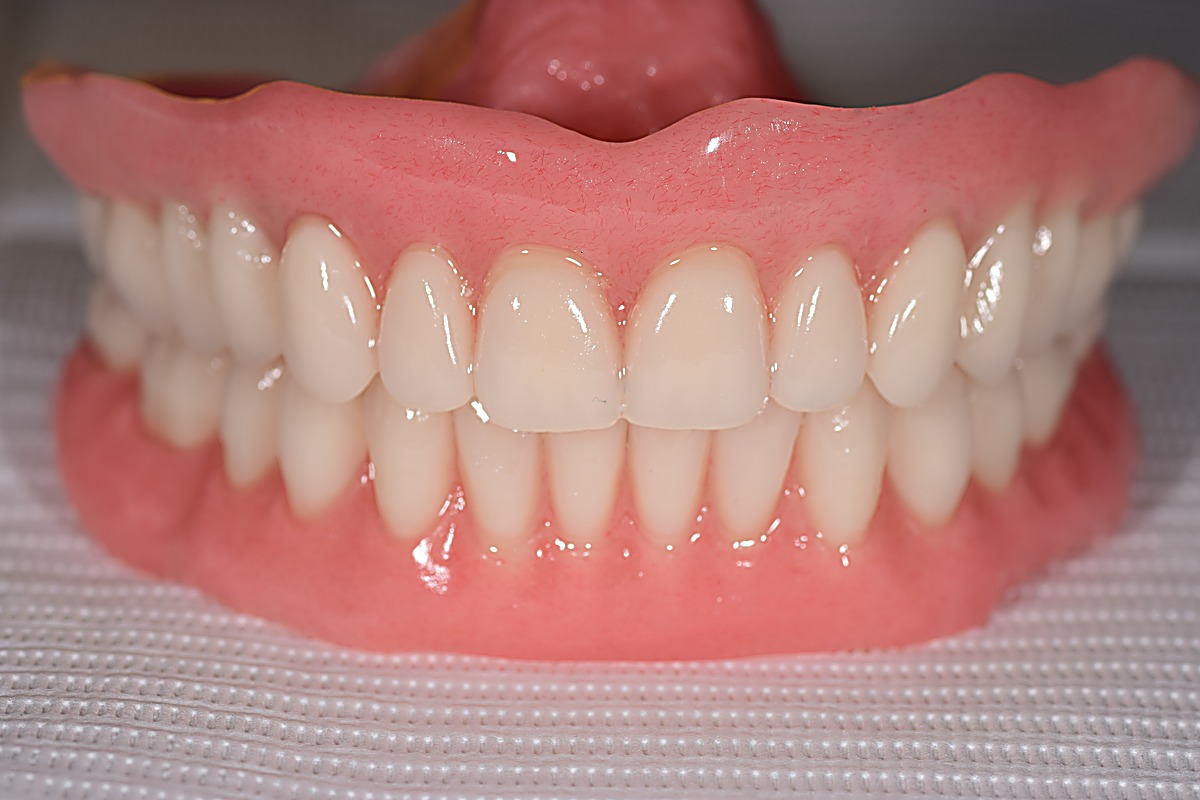
Because all of the teeth were being replaced, there were no existing teeth to simply copy.
We needed to decide exactly where the new teeth should sit — their size, shape, position, bite and support for the lips.
These details were established before surgery using clinical photographs and a 3D intraoral scan.
A set of dentures was then made to test and agree the proposed teeth.
The shape and colour are discussed with you and chosen by you, within what is biologically achievable.
But here’s the interesting part:
The dentures were never intended to be worn as dentures.
Teeth in a day — how does it work?
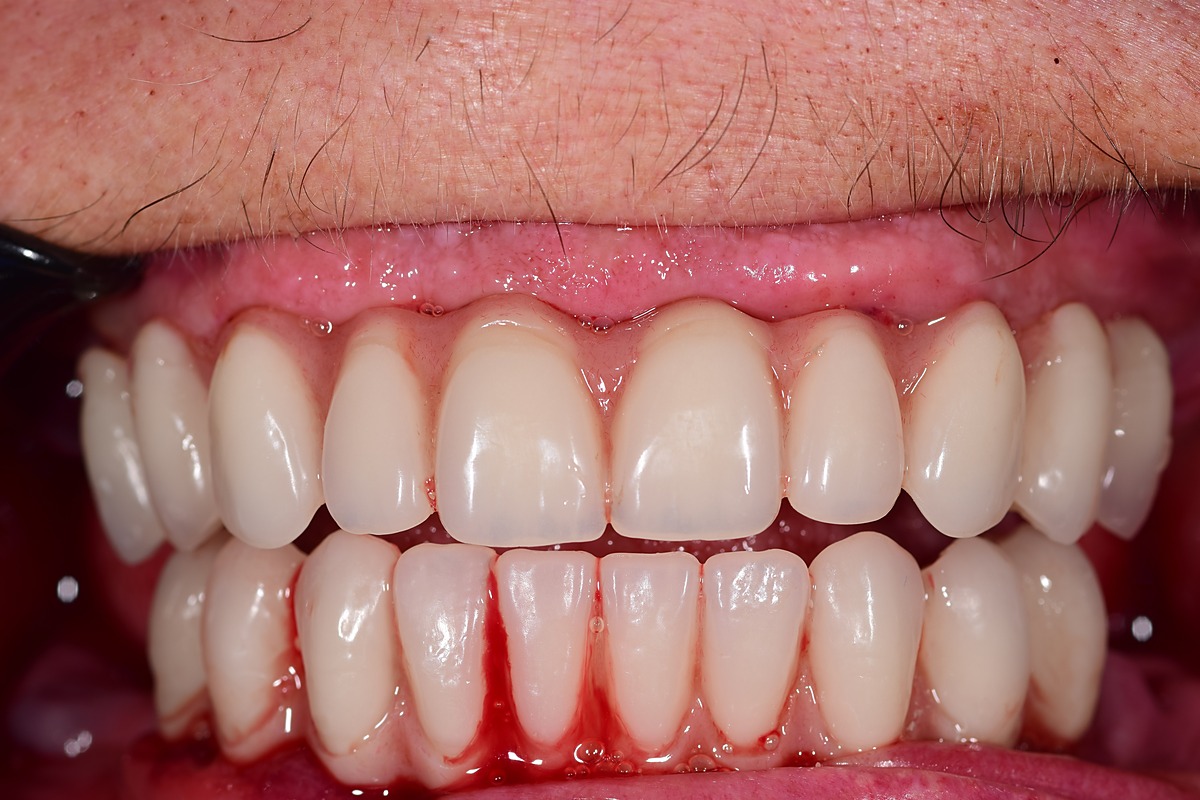
On the day of surgery, the failing teeth were removed and the implants were placed.
The pre-planned dentures were then connected to the implants and converted into fixed provisional bridges.
They were carefully trimmed, reshaped and polished so that the patient could clean underneath them properly.
She left with fixed teeth on the same day.
For someone who had avoided dentistry for 15 years and could not tolerate a conventional denture, this was a significant part of the treatment plan.
What about the gag reflex?
This was one of the factors that made a fixed solution particularly important for this patient.
A conventional upper denture covers part of the palate. For someone with a severe gag reflex, this can make wearing a denture extremely difficult.
Fixed implant-supported bridges don’t need to cover the palate and don’t need to be removed.
The patient also had her treatment carried out under sedation, helping her remain relaxed and comfortable throughout the procedure.
The photographs tell the story
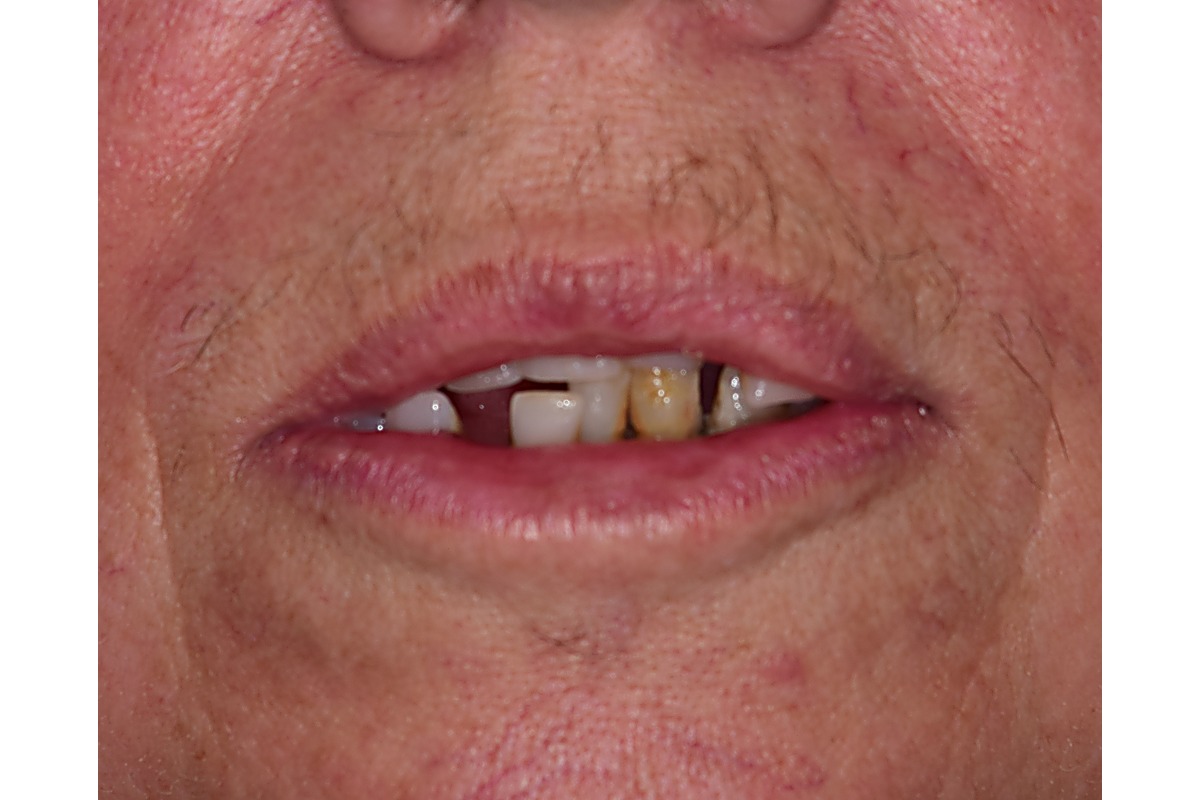
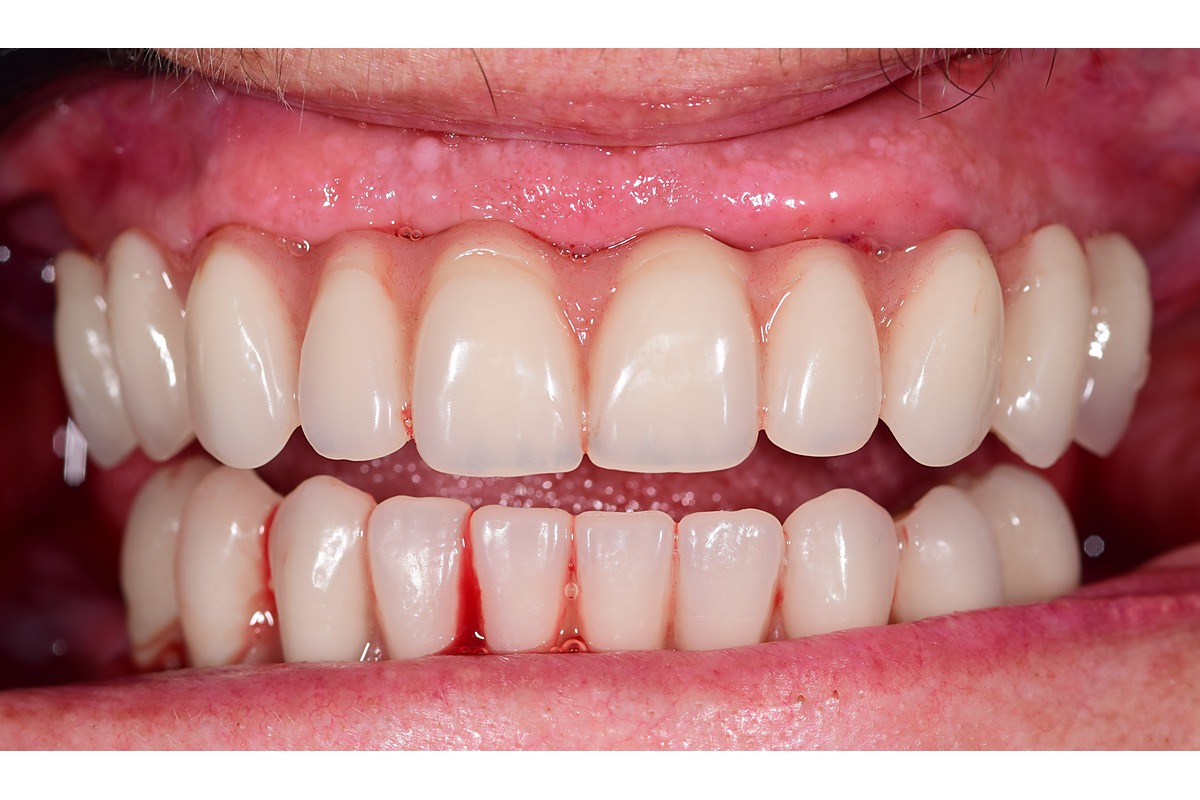
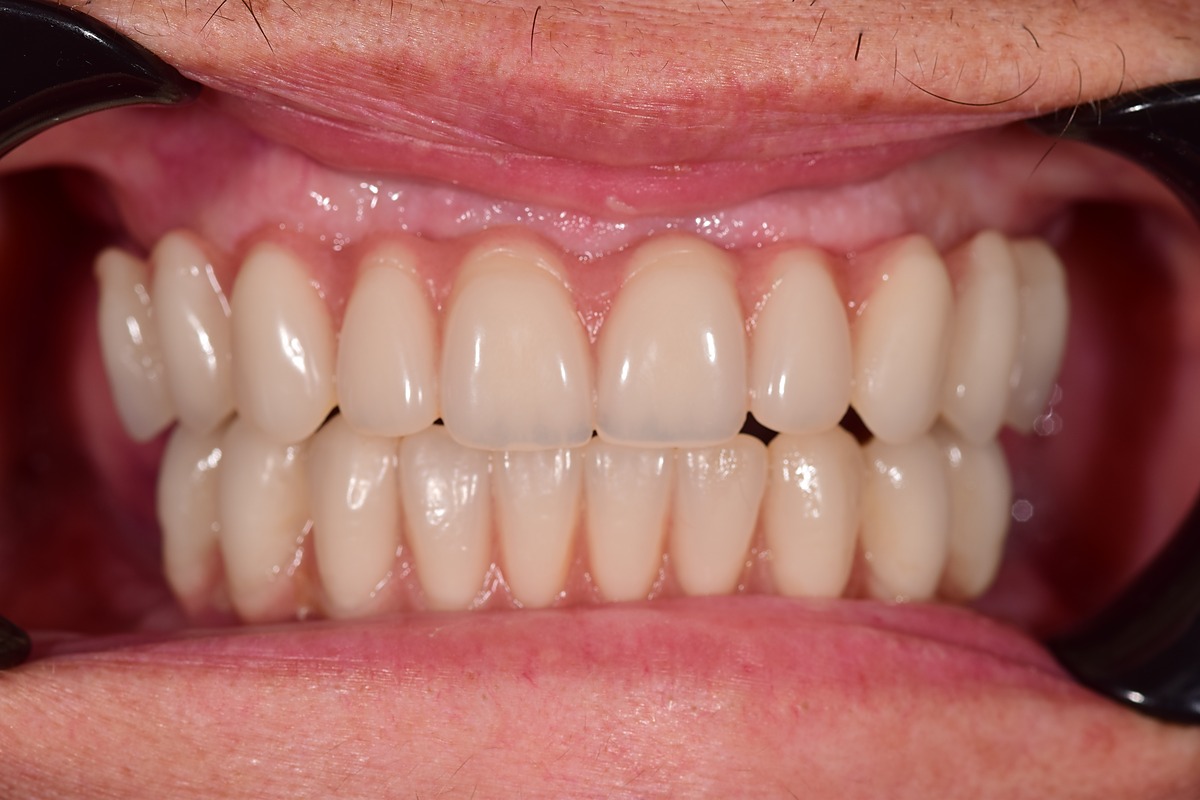
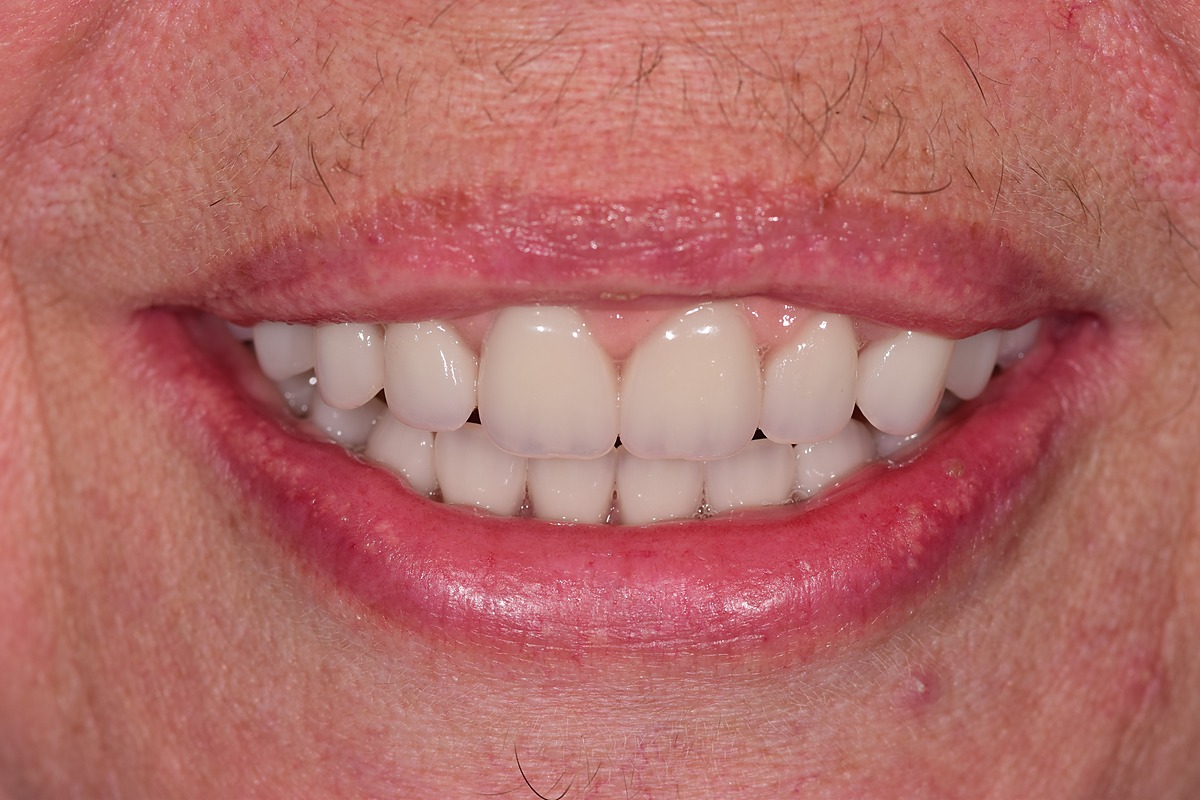
The transformation wasn’t just about appearance.
The patient had gone from teeth that were loose and painful to a set of fixed teeth that she could eat and smile with confidently.
Why don’t you fit the final teeth on day one?
This is an important distinction.
The teeth fitted on the day of surgery are provisional fixed bridges. They are secure and functional, but they allow the implants and surrounding tissues time to heal.
At around three months, the implants are assessed to make sure they have successfully integrated with the bone. Only then are the definitive bridges made and fitted.
This staged approach gives us the opportunity to make sure the foundation is sound before committing to the final result.
Why does who treats you matter?
This case was treated by Dr Amit Duggal, Specialist Prosthodontist.
Amit has more than 16 years of experience in implant dentistry and has placed over 1,000 implants.
But experience isn’t simply about numbers.
For complex full-mouth cases, the important question is whether the treatment is appropriate in the first place — and, if it is, how the implants and the final teeth should be planned together.
Amit’s prosthodontic training focuses on the design, function and long-term maintenance of replacement teeth as well as implant treatment.
That matters.
The position of the implants affects how the final teeth look, function and can be cleaned. Planning both sides of the treatment together means the result is designed with the long term in mind from the beginning.
Fifteen years away from the dentist
Perhaps the most important part of this case isn’t the implants.
It’s the patient.
She had spent 15 years avoiding dentistry because of fear. She also had a severe gag reflex that made conventional impressions and removable dentures particularly challenging.
Rather than judging the gap or asking her to overcome her anxiety first, we planned the treatment around it.
Treatment was carried out under sedation, with the surgical stage completed in a single visit.
Fifteen years after avoiding the dentist, she walked out with fixed teeth.
Is teeth in a day right for everyone?
No — and that’s important.
Implant treatment isn’t automatically the best solution for everyone with failing teeth.
Where natural teeth can be saved and stabilised, that is usually preferable.
For patients with advanced tooth loss, severe gum disease or those who cannot tolerate dentures, however, fixed implant-supported teeth may offer another option.
Suitability depends on your individual circumstances, including your general health, gum health, bone levels, smoking status and the condition of your remaining teeth.
A detailed assessment, including 3D imaging where appropriate, is needed before a treatment plan can be recommended.
What happens after treatment?
The treatment doesn’t finish when you leave with your new teeth.
Regular reviews and professional cleaning are important, particularly for patients with a history of gum disease.
You’ll also be shown how to clean underneath and around the bridges at home.
The aim isn’t simply to give you fixed teeth. It’s to give you fixed teeth that you can look after and keep.
A new start
This patient came to see me after 15 years away from dentistry.
She wanted something fixed. She couldn’t tolerate the idea of a removable denture. Her teeth were failing and her anxiety made conventional treatment particularly difficult.
After careful planning, sedation and a single surgical visit, she left with fixed provisional teeth.
Three months later, once the implants had integrated, her definitive bridges were fitted.
There may be options you haven’t considered
If you have failing teeth, struggle with dentures, have a strong gag reflex or have been avoiding the dentist because of anxiety, book a consultation with Dr Amit Duggal at Landmark Dental to find out what may be possible for you.
01442 269 826
Landmark Dental, Apsley, Hemel Hempstead
Please note: Photographs show a genuine patient treated by Dr Amit Duggal, Specialist Prosthodontist, and are published with their consent. Individual results vary. Suitability for implant treatment is confirmed only following a clinical assessment, radiographs and a 3D scan. All treatment carries risks and benefits, which will be discussed with you in full before you decide to proceed.