
Smile Transformation: Straighten Then Refine
She had been unhappy with her smile for years. She came in asking about veneers.
We suggested she didn’t have them. At least, not yet.
Our patient was 39. Her teeth didn’t sit together in a way she was comfortable with, and she disliked how they looked when she smiled or was photographed.
She described it as a cosmetic problem.
The examination said otherwise.
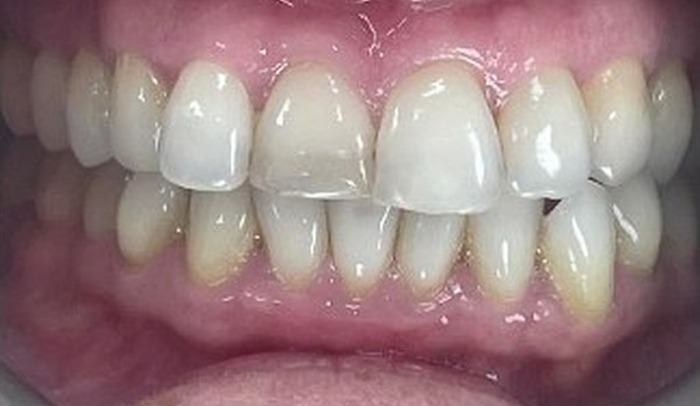
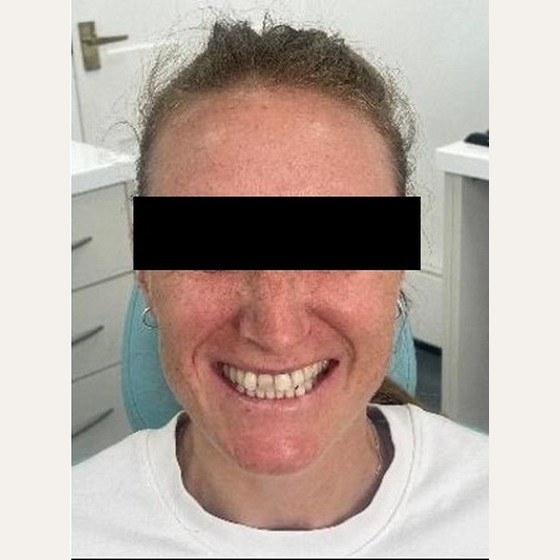
Before treatment
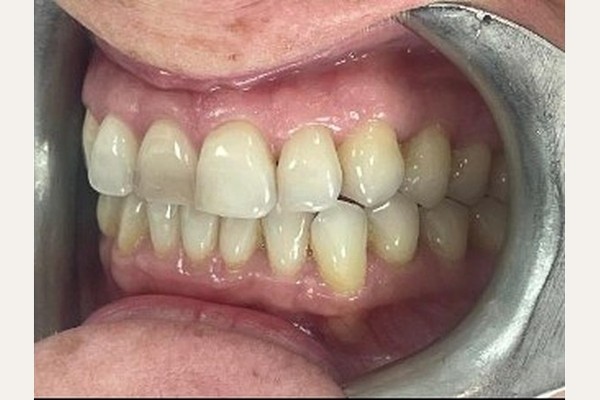
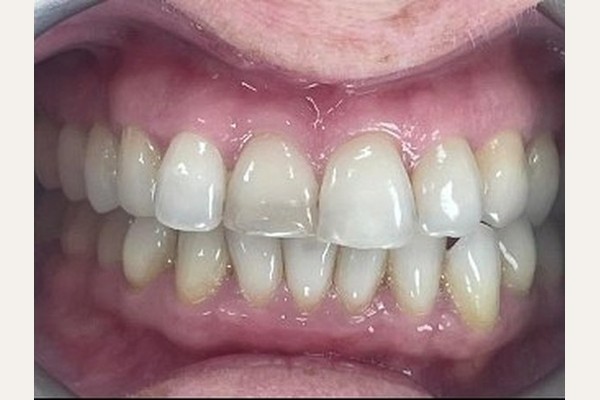
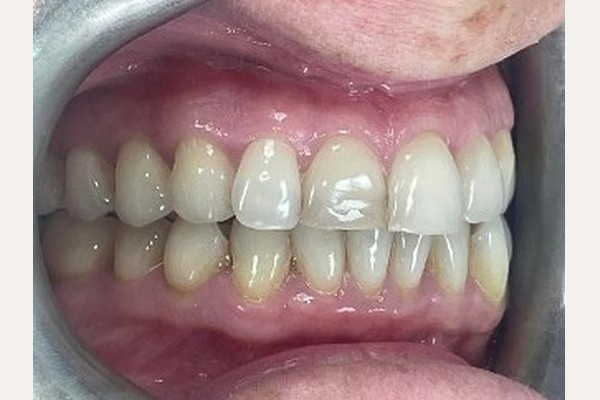
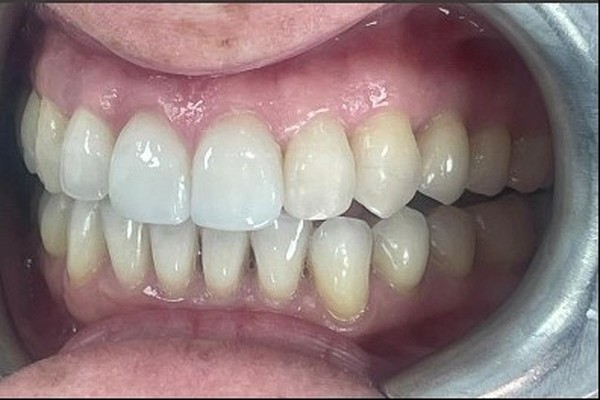
Look at the side views rather than the front one. That’s where the real problem is — her bite was contributing directly to how the smile looked.
What veneers alone would have meant
We could have gone straight to veneers. It would have been quicker, and she’d have left happy in the short term.
But teeth restored in the wrong position force the restorations to compensate for that position. In practice:
- More healthy tooth drilled away to make room
- Bulkier, less natural-looking results
- Restorations that are harder to keep clean
- A new smile working against the bite instead of with it
That’s not a better smile. It’s a nicer-looking one, built on the same problem.
So we did it the other way round
Move the teeth into the right place first. Then finish with the smallest amount of restorative work needed.
Which meant two clinicians, planning together, before anything started.
- The orthodontics was carried out by Dr Rohini Babber, Specialist Orthodontist, using Invisalign to correct the bite and align both jaws.
- Manish Gudka then completed the case with composite bonding and a single porcelain veneer.
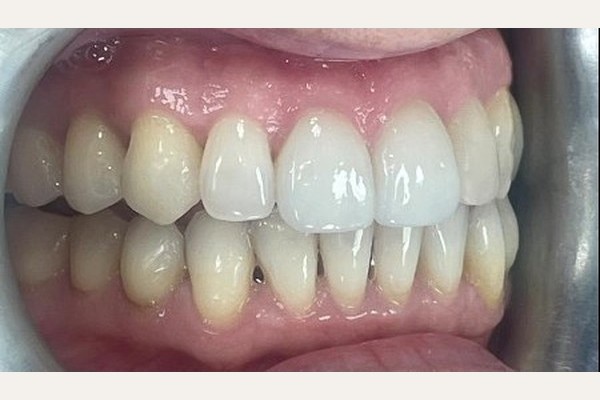
- Because both planned it together, the teeth ended up in exactly the right place for the restorative work — not simply straightened and handed over.
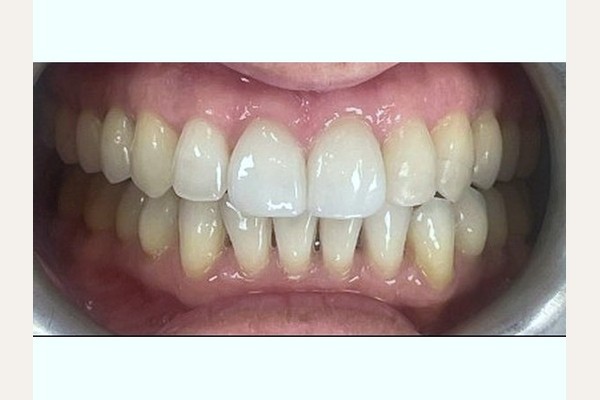
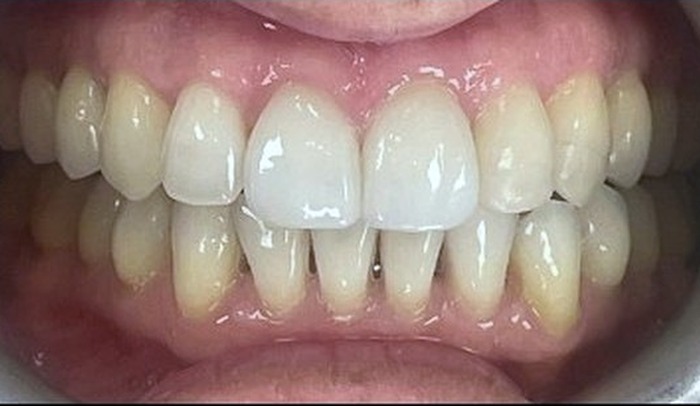
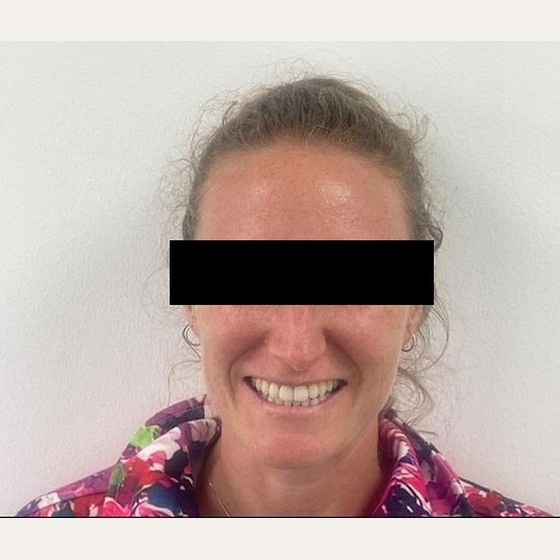
The result
After treatment
Why patients come to us for this
Every specialist field under one roof. Your whole treatment planned in one place, by clinicians who work together every day — so you’re not sent elsewhere halfway through, and nobody is guessing what the last person intended.
Orthodontics here is led by Dr Rohini Babber, a Specialist Orthodontist who trained at King’s College London and gained her MSc in Orthodontics with Merit. She treats with the full range — fixed braces, ceramic and lingual braces, and clear aligners — and brings vast experience across hundreds of cases, from the straightforward to the genuinely complex.
That range matters. Aligners are excellent for many cases and unsuitable for others. Where only aligners are offered, the appliance has effectively been chosen before your assessment.
The restorative work was carried out by Manish Gudka, who graduated from King’s College London and holds a Postgraduate Certificate in Aesthetic Dentistry. Patients tend to describe him as calm and attentive, and his eye for detail is what separates a result that looks like teeth from one that looks like dental work.
Common questions
Would this approach be right for me?
Not always. If your teeth are already well positioned, cosmetic work on its own may be all you need — and we’ll tell you that.
But if your bite is part of the problem, treating only the surface of it rarely lasts. The only way to know which applies to you is an assessment.
Can I have whitening as well?
Yes — but the order matters, and getting it wrong is expensive.
Whitening comes first. Your natural teeth are whitened to the shade you want and left to settle, and only then is the bonding or veneer made to match it.
Bonding and porcelain don’t whiten. If you have the restorative work done first and whiten afterwards, your natural teeth get lighter and the restorations stay exactly as they were — and the only way to fix the mismatch is to replace them.
How long does composite bonding last?
Typically several years, and often longer. Composite is a direct material, so it can pick up staining at the edges over time and may chip — but it’s straightforward to polish, repair or refresh without starting again.
How long it lasts depends on your bite, whether you grind, and what stains it: coffee, red wine and smoking all shorten it.
How long do porcelain veneers last?
Longer than bonding. Porcelain is far more stain-resistant, and many veneers last well over a decade.
Longevity depends on the same things — your bite, grinding, and gum health — and on how much sound tooth was there to bond to in the first place. Nobody can promise you an exact number, due to individual variability and the different factors involved.
Do I have to have moulds taken of my mouth?
No. We use a 3D intraoral scanner instead. It’s a small wand passed over your teeth that builds an accurate digital model on screen — no tray of material sitting in your mouth while it sets, nothing to gag on, and we can stop at any point.
It’s quicker, more comfortable, and more accurate than conventional impressions. If you’ve had a bad experience with moulds before, this is usually the thing that changes patients’ minds.
How long do I need to wear a retainer after treatment?
Indefinitely — and that isn’t a catch. Teeth have a lifelong tendency to drift back towards where they started, so retainers are what hold the result rather than an optional extra at the end.
In practice that usually means wearing them full time for a short period, then nights only, long term. It’s a small habit, and it protects not just the straightening but the bonding and veneer built on top of it.
Do I have to pay for everything at the beginning?
No. There are two ways to do it.
Most patients pay a deposit at the start and spread the remaining cost across the course of treatment, as each stage is carried out.
We also offer interest-free payment options, which are subject to status and a credit check. Either way, you’ll have a full written treatment plan with the costs set out before you commit to anything.
Thinking about veneers?
Come and find out what’s actually causing the problem first — and what your realistic options are, including the ones that don’t involve cutting healthy teeth.
01442 269 826
Landmark Dental, Apsley, Hemel Hempstead
Please note: Photographs show a genuine patient treated at our practice, published with their consent, with identifying features obscured. Individual results vary. The treatment and result appropriate for you can only be determined after a clinical assessment, and all treatment carries risks and benefits which will be discussed with you in full beforehand.